The Beige Horizon
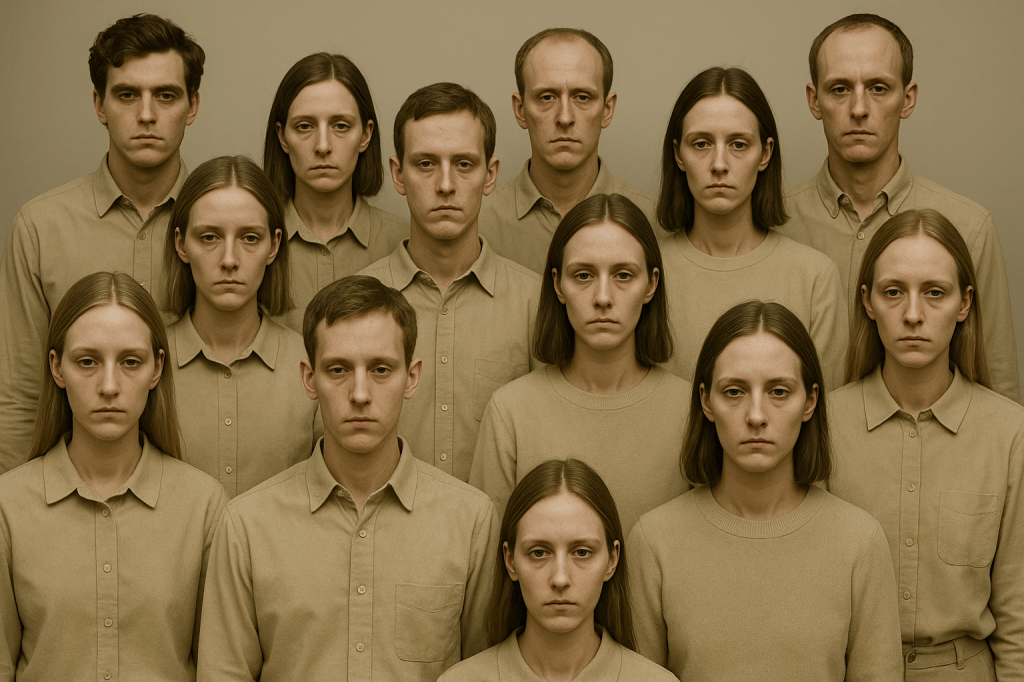
It began decades ago in a fluorescent-lit classroom, my Irish dynamo of an instructor loving my opening speech about the Banshee—that melodramatic harbinger of death. The honeymoon ended at midterms when I delivered a persuasive manifesto about “The Beige Horizon”: a world drained of fire, where uniqueness was ironed flat and every jagged edge of identity smoothed into nonabrasive neutrality.
Mrs. M and my classmates dismissed it as “unlikely, too bleak, Orwellian.” Too weird. Maybe. But weird was honest.
Now? Beige didn’t just arrive—it RSVP’d early, brought a gluten-free casserole, and lectured the spices for being ‘too aggressive.
We haven’t lost color—flowers bloom, flags wave, Instagram sunsets glow. But beneath the surface paint, beneath curated diversity campaigns and algorithm-optimized virtue, we’ve gone flat. Our uniqueness is shrink-wrapped for mass consumption, the human spirit repackaged with a “New & Improved!” sticker.
Politics has gone binary. You’re righteous or reprehensible, red or blue, woke or asleep, patriot or traitor. The middle—where reason dwells and contradiction breathes—is now a desert patrolled by pundits. Debate has devolved into performative outrage. Difference, once celebrated, is flagged for review.
Globally, dissent drowns beneath nationalism’s drumbeat. Cultures aren’t exchanging—they’re eroding into sameness through suppression. The tools meant to bridge us—social media, streaming, instant translation—enable an endless scroll of watered-down everything. Language flattens. Dialects die. Tradition becomes TikTok fodder.
Even taste has faded. Global franchises serve identical menus from Barcelona to São Paulo. Spices are calibrated for mass appeal. Art is A/B tested. Music is engineered by data, not soul. We consume content like calories: efficiently, mindlessly, forgettably.
Here’s what we’re really losing: the thrill of friction. The jazz of dissent. The glorious mess of personalities that don’t align. The courage to ask awkward questions. The sacred awkwardness of meeting someone utterly unlike you and not running away.
We don’t need chaos. We need the audacity to offend politely. Dialects that sing, flavors that burn, art that refuses explanation. People who stand out—not in defiance, but in delight.
I don’t mourn the colors—we still have those. I mourn the boldness to wear them loudly. To risk embarrassment, disagreement, rejection in the name of real, unfiltered selfhood.
Because being vibrant isn’t safe. And that’s exactly why it matters.
